
There are several times a year when many enjoy some much-needed vacation time from school or work. Whether taking time off for the holidays or embarking on a summer break, when not headed to a family gathering or distant shore, there might be a more impactful alternative to getting lost in a good book, binge-watching a popular series, or lounging by the pool. According to ActivateGood.org, many people are drawn to volunteerism as an “extracurricular activity” because…
- They have a desire to connect with their community
- Volunteering offers flexibility that can fit into a busy schedule
- It provides a chance to make a tangible difference on issues they care about
Many nonprofits rely on volunteerism to further their missions, and with over 1.9 million registered public charities, private foundations, and 501(c)(3) organizations in the U.S., there is a treasure trove of worthy causes that could benefit from a portion of one’s vacation time. Because the need is so great, getting started is easy.
Find a Cause That Resonates with You and Learn How You Can Help
Just as one might plan their attire for an upcoming beach trip, volunteering takes a little forethought. Make a list of causes that hold meaning for you and then start doing your research. Talk to friends, ask around at church, and start scouring the internet for highly regarded nonprofits near you. Bear in mind that the smaller the nonprofit, the more likely your time will have a greater impact. Many people are led by what tugs at their heartstrings or keeps them up at night. You may be moved by the thought of shelter animals in need of a home. You may be concerned about the environment that surrounds us all. Or you may feel a calling to serve a cause that directly impacts the human experience, such as sex trafficking, food insecurity, literacy, and beyond. If you’re particularly empathetic, you might find it difficult to narrow that list down to just one.
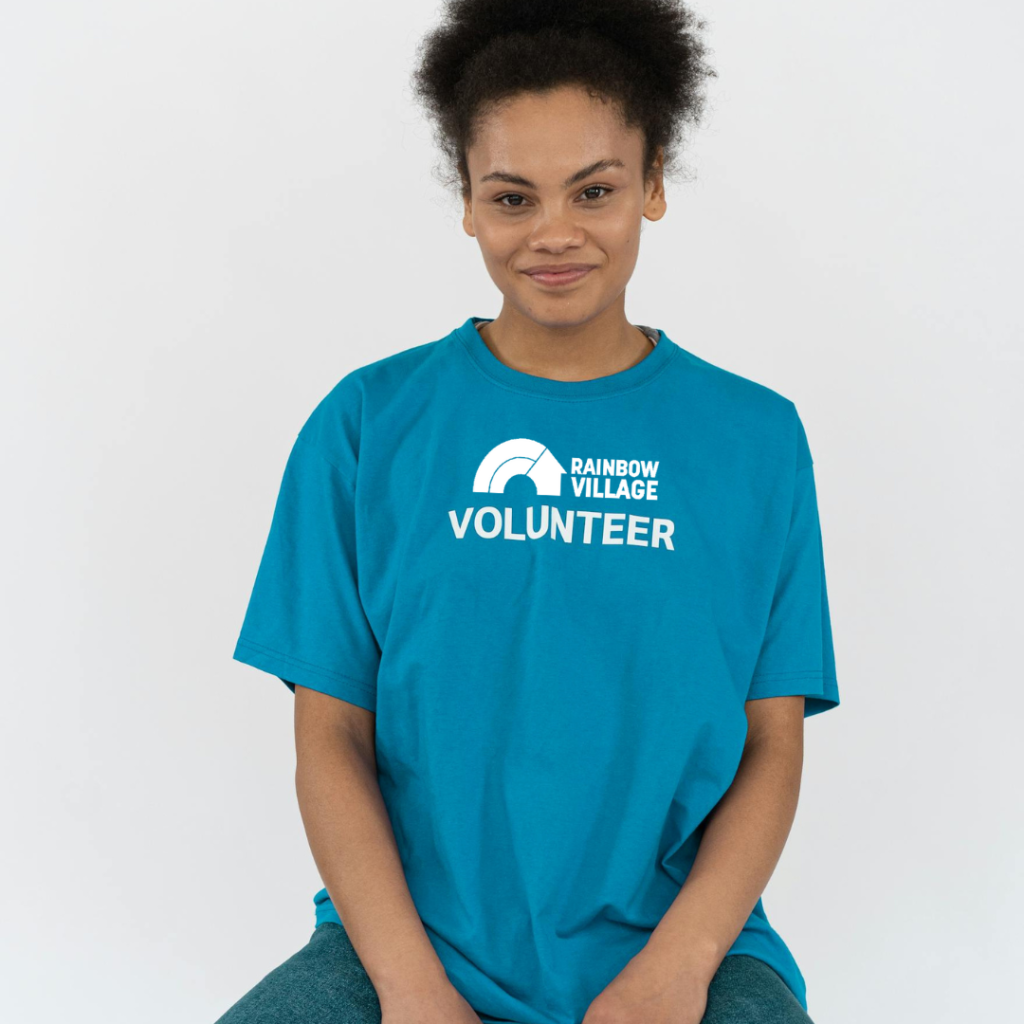
Once you’ve reduced the list to just a few worthy causes, visit their websites or call to learn more about volunteer opportunities open to you. For instance, Rainbow Village is a Georgia-based nonprofit that provides transitional housing and transformational programming to unhoused and housing-insecure families with children. Following some impressive growth over the last three and a half decades since its launch, the organization now offers a wide variety of volunteer activities. One may organize a group to provide a meal during one of the community’s Family Dinner Nights. Volunteers can paint and prepare an apartment for an incoming family. Church and corporate groups may pack snacks or bring games and activities to engage the students of the nonprofit’s after-school youth program, among other volunteer activities. Whether as an individual or as a group, by planning ahead with a nonprofit of your choosing, you can schedule time to volunteer during your vacation or holiday break.
Have a More Lasting Impact by Donating Your Time and Talents Beyond Vacation
Once you’ve dipped your toe in the volunteer pool, don’t be surprised if you feel compelled to do more. If you have a specialized talent – anything that runs the gamut from accountant to artist – it might prove useful to the nonprofit with which you’ve developed a relationship. Drawing upon Rainbow Village once more for illustration purposes, the nonprofit’s afterschool program often looks to off-duty educators, artists, and musicians to enhance its programming by leading tutoring, hands-on art activities, and music lessons. For its adult residents, workshops that focus on improving credit scores, paying off debt, and increasing savings might prove a great fit for bankers, financial planners, or accountants to lead or facilitate.
Take a look at your professional and personal talents and ask yourself, “How can these skills benefit a nonprofit?” You might be surprised by the answer, depending on the nonprofit you choose. Virtually every nonprofit could benefit from legal advice if you’re a lawyer, marketing support if you’re a communications professional, event planning if you’re a wedding or event planner, or technology assistance if you’re in the computer industry.
Additional Ways to Make an Impact
If your vacation time is already spoken for, you can still have an impact on a cause that holds meaning for you. Financial contributions are a given, with many nonprofit organizations relying heavily on monetary donations from individuals, foundations, and corporations to fund their operations and support their missions. Many also depend on in-kind donations to help reduce operational costs, allowing them to allocate monetary resources to mission-critical programs. An animal shelter likely relies on donations of bedding and pet food; a housing program would appreciate donations of home goods and cleaning supplies; a foster program would welcome clothing and personal care items; the list goes on and on. To maximize your impact, you can launch a donation drive – whether monetary or in-kind – through your social media circles, school, or work. Share your passion for the nonprofit you’ve adopted, and others are likely to follow your example.
Set an Example for Others to Follow
Another way you can have an impact on a nonprofit that holds meaning for you – not just on vacation, but 365 days of the year – is to advocate on behalf of their organization. Beyond your volunteer hours and donations, advocating regularly will raise awareness of that nonprofit and the cause it serves. Follow their social media pages, like and comment, and share when it makes sense for you. Invite others to volunteer alongside you, and encourage your school, church, group, or company to become involved with that nonprofit. If making a monetary contribution, learn whether your company will match the donation. If they have an upcoming event, see whether your company might be interested in sponsoring it.
Perhaps the best example you can set through volunteerism is for your children, if you have them. The National Survey of Children’s Health, conducted by the Census Bureau, and a JAMA Network Open study of over 50,000 U.S. children and teens found links between prosocial interventions and improved health outcomes. Those who volunteered in the past year were:
- 34% more likely to be in excellent or very good health.
- 66% more likely to be considered “flourishing,” which is a positive measure of overall well-being.
- 35% less likely to have behavioral problems.
- 25% less likely to have anxiety.
With Gen X leading in volunteerism at 28%, there are a lot of parents and grandparents out there who can inspire the up-and-coming Gen Z, Gen Alpha, and even Gen Beta. Many nonprofits offer volunteer opportunities that the whole family can take part in, expanding your impact with each additional family member. Not to mention the incredible lessons your children are learning by giving back to their community.
Key Takeaways
- Volunteerism, financial contributions, and in-kind donations are all noble pursuits that provide an opportunity to make a difference
- Many worthy nonprofit organizations would welcome your time, talents, and treasure
- Because it is unpaid time, many nonprofits are happy to work within your schedule – whether after school or work, or during a vacation or holiday break, offering the flexibility to make your relationship work
- The result of your volunteer efforts is not only felt by the organization you serve, but is observed by those around you – making you a good example for others to follow
- If time proves challenging for you, you can still make an impact through financial contributions, donation drives, and advocacy
Sources: https://www.nonprofitlists.com/blog/how-many-nonprofit-organizations-in-the-us.html
https://activategood.org/volunteering-statistics-2025/ https://pmc.ncbi.nlm.nih.gov/articles/PMC10230312/